Circular Economy Singapore: From Zero Waste Masterplan to Business Strategy

The circular economy in Singapore is accelerating, driven by tightening regulation, investor scrutiny, and national policy priorities. Since the launch of the Zero Waste Masterplan in 2019, circularity has become a core pillar of Singapore’s 2030 agenda, with direct implications for how organisations design, source, and recover materials. As expectations converge, Singapore‑based companies face growing pressure to move beyond compliance and adopt deliberate, commercially grounded circular economy strategies.
At a Glance: Key Impacts for Business
In this article, we summarise recent policy shifts, the expansion of Extended Producer Responsibility (EPR), and why capabilities like Life Cycle Analysis (LCAs) and product passports are the new “must-haves” for market resilience.
The circular economy in Singapore is a commercial priority for businesses, as policy, investor, and consumer expectations heighten. Packaging waste, including plastics, makes up roughly one‑third of Singapore’s domestic waste stream, making it a priority area under the Zero Waste Masterplan.
The Mandatory Packaging Reporting (MPR) under the Resource Sustainability Act requires companies to submit detailed packaging data and annual 3R (Reduce, Reuse, Recycle) plans. This has made packaging data governance an operational requirement for brand owners, importers, and retailers with turnover above SGD 10 million. Data collected from the MPR feeds directly into ongoing feasibility studies for broader EPR frameworks likely to emerge this decade.
At the same time, EPR obligations are expanding globally.
For instance, the EU’s Packaging and Packaging Waste Regulation (PPWR) and Eco-design for Sustainable Products Regulation (ESPR) will apply to imported goods, meaning Singapore exporters that serve EU markets must now prepare to comply with European circularity standards, requiring consistent product data, recyclability evidence, and traceable material disclosure.
This combination creates a single commercial signal: circularity is now part of how organisations protect margins, reduce compliance disruption, and safeguard market access.
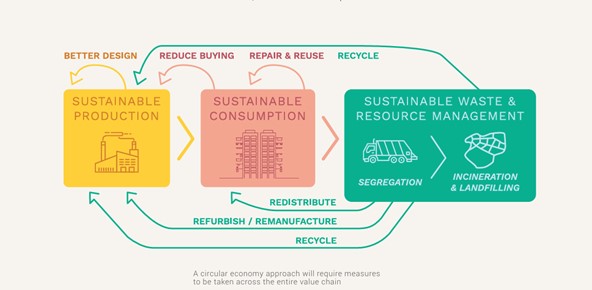
Inside organisations, circularity often enters through multiple business functions, which can hinder consistent execution. Circular economy principles set direction by keeping materials in use, reducing waste, and designing out avoidable loss across the value chain. Delivery depends on coordinated decisions across product design, procurement, manufacturing, logistics, and recovery systems.
Sustainable packaging is one of the fastest ways to translate this into action and see ROI because it sits directly at the intersection of cost, reporting, customer trust and end-of-life outcomes. EPR then provides the accountability mechanism that sharpens incentives and accelerates adoption by shifting end-of-life responsibility onto producers and brand owners.
When leaders connect these threads, they stop responding to each new requirement in isolation and start building one coherent strategy that serves compliance, cost control and brand credibility.
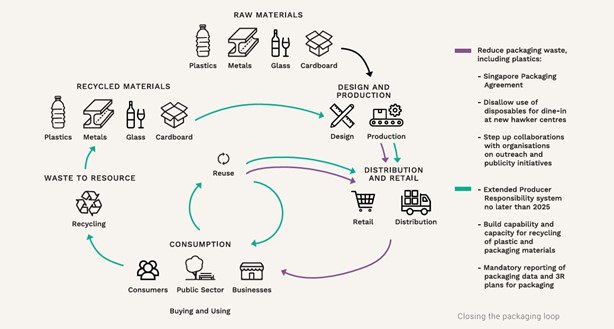
Singapore’s regulatory approach is phased but directional, moving towards progressive tightening around packaging, plastic use, and resource recovery.
These measures sit within, or are closely aligned to, Singapore’s Zero Waste Masterplan and the wider Green Plan 2030, collectively shaping the country’s circular economy direction.
Key policy developments that will continue to shape Singapore’s circular economy landscape include:
The organisations most exposed share common gaps: inconsistent formats across markets, limited packaging and material data, and unclear decision ownership. Those gaps typically create higher EPR exposure, rushed redesign, and compliance delays.
Singapore’s Mandatory Packaging Reporting scheme applies to organisations that:
Obligated companies include producers of packaged products such as brand owners, manufacturers and importers, as well as retailers such as supermarkets, where they meet the threshold criteria.
Packaging data is often dispersed across teams and suppliers, and the regulations require a clear methodology behind reported weights and materials. Early preparation reduces compliance risk and avoids last‑minute operational pressure.
Effective circularity implementation relies on robust data, clear governance, and consistent measurement. International frameworks such as the ISO circular economy standards provide definitions and methodologies that help companies align procurement, design, and reporting processes. This consistency reduces ambiguity and increases confidence that sustainability actions are both defensible and scalable.
Life Cycle Assessments (LCA) are becoming indispensable tools for validating product and packaging claims. LCAs map environmental impacts across the lifecycle, from raw material extraction through to disposal, helping teams make trade-offs visible and decisions evidence-based.
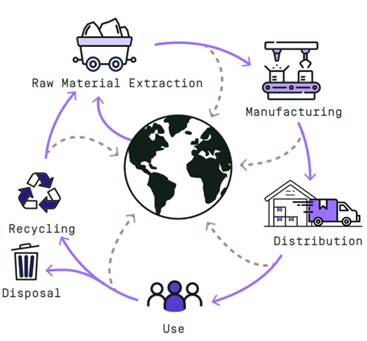
LCAs are the measurement backbone that connects EPR and circularity regulation to practical product decisions. LCA data is also the “source code” for Digital Product Passports. LCA’s quantify environmental impacts across a product’s full lifecycle, from raw materials to end-of-life, helping producers identify design changes that reduce waste, boost recyclability, and lower EPR fees. LCAs support compliance by validating packaging data, recycled content claims, and 3R strategies, while aligning with global standards like the EU’s PPWR and ESPR that exporters must meet.
However, conducting LCAs at enterprise scale remains a challenge because product data often resides across multiple systems and suppliers.
Digital tools such as Anthesis Intelligence Product Assessments integrate material, packaging, and supplier data into one platform, enabling portfolio-level decision-making rather than one-off assessments. By scaling LCA insight, leaders can identify which product redesigns will deliver the greatest return across compliance, cost, and carbon metrics.
Early movers in Singapore’s circular economy will secure a measurable competitive advantage. As policy settings tighten and market expectations rise, organisations that act now reduce execution risk later.
Early action helps organisations:
As the window for low‑regret action narrows, decisions made today on product design, packaging, and material sourcing will shape cost structures, supply security, and regulatory exposure over the next decade. When applied deliberately, circularity strengthens cost efficiency, supply security and market resilience, extending well beyond compliance.
Organisations that act early tend to move faster later. A disciplined, portfolio‑first approach helps focus effort where it matters most and avoids fragmented activity.
For organisations in Singapore and around the world, circularity now plays a strategic role in reducing cost and supply chain risk, while strengthening resilience and competitiveness. Early action creates greater control. It improves visibility of material flows, limits exposure to future compliance costs, and supports supply chain continuity in a region where policy settings and market expectations are advancing rapidly.
Purmo Group developed practical packaging and circular design guidelines to support its circular economy objectives. The work focused on translating circular principles into clear guidance for design, procurement and packaging decisions, and improving alignment across functions. The resulting guidelines provide a consistent framework to support day‑to‑day decision‑making and more circular outcomes across the business.
Read the full case study on developing packaging and circular design guidelines for Purmo Group.
Anthesis works with organisations across Singapore and APAC to clarify requirements, reduce complexity, and convert compliance efforts into commercial advantage. This includes regulatory exposure assessments, packaging and materials strategy, redesign programs, LCA capability and digital enablement, and circular business model design.
If you’d like to discuss a Singapore-led circular economy roadmap that scales across APAC, learn more about our circularity services here and reach out to our team below.
We are the world’s leading purpose driven, digitally enabled, science-based activator. And always welcome inquiries and partnerships to drive positive change together.
Take our free risk assessment to find out if your business is subject to global EPR legislation.


