Accelerating the Transition to Better Scope 3 Data and Faster Decarbonisation
Breaking the scope 3 data deadlock between buyers and suppliers
5 May 2026

Breaking the scope 3 data deadlock between buyers and suppliers
5 May 2026
Discover key levers to stronger scope 3 data and supplier engagement in just five weeks with our guided email series.
Scope 3 emissions dominate most corporate carbon footprints, and reducing them is essential to achieving net zero. In theory, companies can manage scope 3 emissions by using supplier-level carbon data to both understand where emissions sit and inform the decisions needed to reduce them.
Unfortunately, the reality of addressing scope 3 emissions is not that straightforward. Most suppliers do not yet have the capability to generate the level of carbon data on their products and services that is required for companies to make meaningful purchasing decisions. Building that capability takes time, investment, and new processes.
Effective Scope 3 decarbonisation requires action from both companies (buyers) and their suppliers. To play their respective roles, both need better data.
Suppliers control how products are made, what they are made of, and where they are produced, putting them in a strong position to reduce emissions for themselves and their buyers. To act, they need primary data to identify hotspots, implement reduction measures, and measure the effect of those actions over time.
Buyers looking for lower-carbon products and services generate commercial incentives for suppliers to disclose and decarbonise. To make these procurement decisions, they need high-quality supplier data to operationalise lower-carbon procurement, thereby creating the commercial incentives for suppliers to disclose and decarbonise.
This creates a “chicken and egg” dynamic.
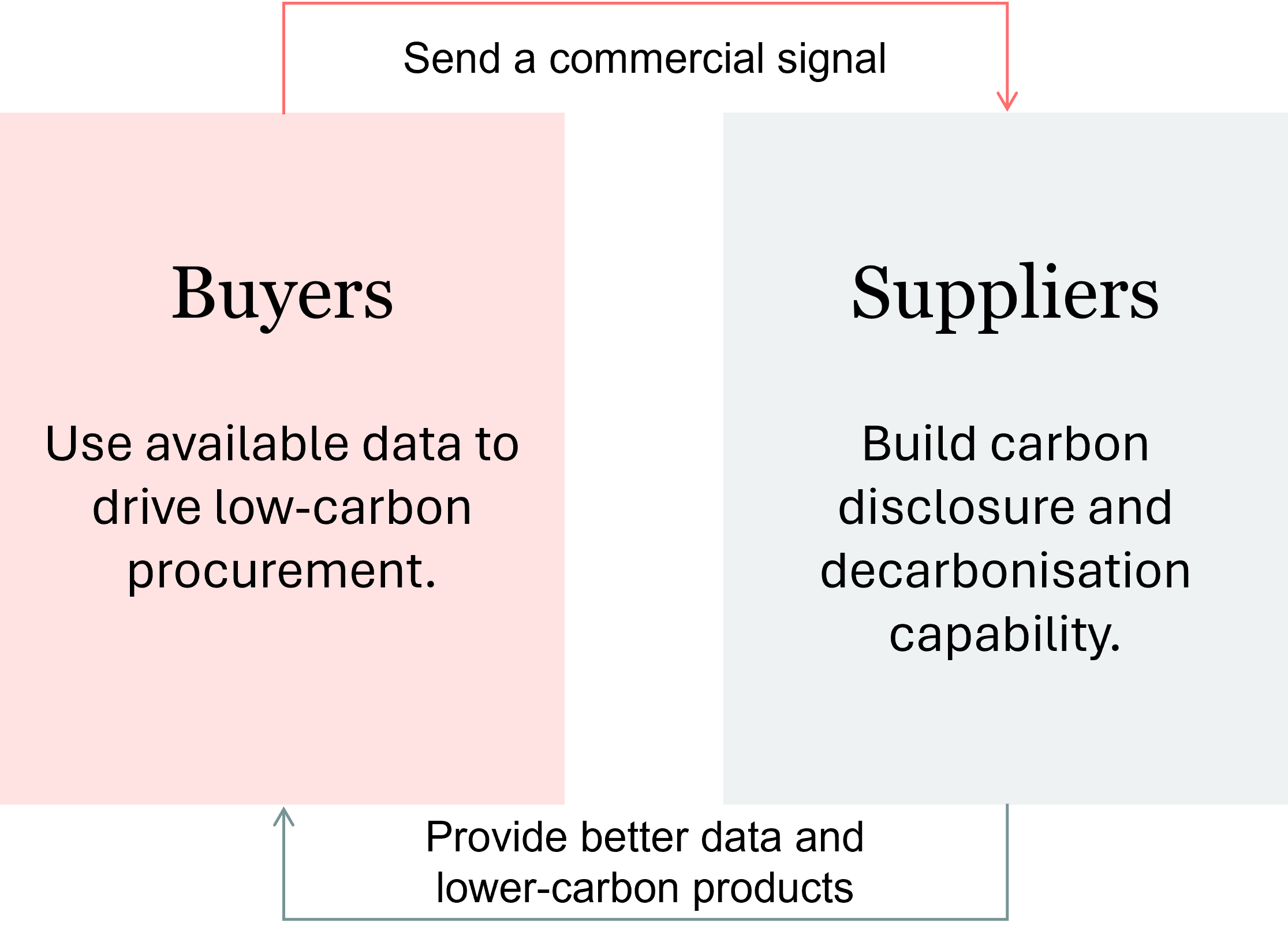
Suppliers must generate the data needed for both parties to act, but doing so requires a significant capability build – one they are unlikely to invest in without a clear commercial signal from their customers.
Buyers create that signal by operationalising lower-carbon procurement, but cannot do so without actionable supplier data.
Luckily companies do not need to wait for perfect supplier data to act. They simply need enough data to differentiate between suppliers in a way that influences decisions and begins to push the procurement needle toward lower carbon products and services.
Breaking the deadlock requires a structured, long-term programme that both:
This, in turn, requires a focus on four areas:
Take a deeper dive into each of these focus areas and more in our free, five-week guided email series on better scope 3 data. Throughout the series, we share expert advice, additional resources, and practical next steps that can be completed each week to get started on the path to faster decarbonisation today.
We are the world’s leading purpose driven, digitally enabled, science-based activator. And always welcome inquiries and partnerships to drive positive change together.


