Preparing for IFRS S2’s Anticipated Financial Effects Disclosures
Bridging the Gap Between Sustainability Reporting and Reality

Bridging the Gap Between Sustainability Reporting and Reality
Within IFRS S2, the requirement to disclose the anticipated financial effects of climate-related risks and opportunities (CRROs) brings the evolving investor expectations of performance, valuation and cash flow into focus. For many, this becomes a technical challenge, requiring finance and sustainability teams to work together in new ways and to bring forward-looking judgment into reporting.
For forward-thinking firms, these requirements are an opportunity to sharpen how climate considerations feed into financial planning, investment decisions and resilience thinking. The process uncovers operational insights that extend far beyond the disclosure itself—turning a reporting mandate into a competitive advantage. Having supported clients across a wide range of ISSB-related engagements, in this article, our experts share several insights that can support companies in drafting investor-ready disclosures.
The crux of this disclosure requirement is on how your financial trajectory – position, financial performance and future cash flows evolves alongside your climate strategy. To determine this, organisations must determine the financial impact of CRROs and the extent to which they are placed to manage them.
The journey to quantification begins with a focused scoping exercise. By leveraging the outcomes of double materiality assessments or existing Enterprise Risk Management (ERM) frameworks, organisations can isolate the most investor-relevant risks and opportunities for deep-dive analysis.
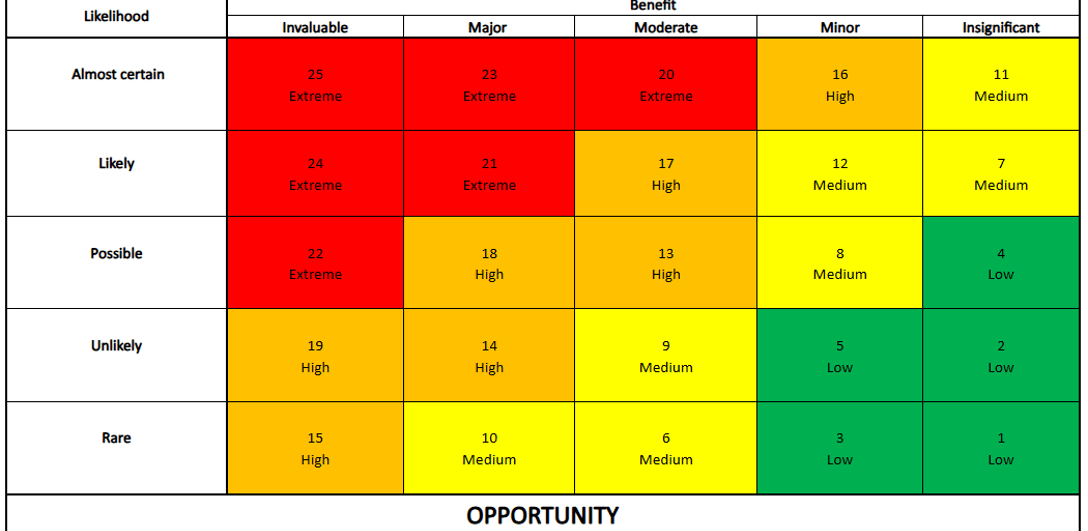
Importantly, CRROs manifest across multiple financial channels. Physical risks, such as extreme weather, may impact revenues, operating costs and asset values, while transition risks – such as carbon pricing or shifting demand – may impact pricing, supply chains, or access to finance.
The goal is to prioritise the most significant financial levers, ensuring the analysis remains focused and decision-useful. Having prioritised the financial impacts, CRROs can be translated into financial effects and mapped to relevant line items in the income statement, balance sheet, or cash flow statement.
Having determined the level of climate-related risk to which it is exposed or the value of the climate-related opportunity, a company must then determine its strategy. For risks, this means assessing the extent to which current levels of adaptation or mitigation measures reduce the risk to an appropriate level and identifying if further action is required, such as building flood defences in flood-prone areas. For opportunities, this involves assessing the extent to which the company can capture the identified benefits and the level of investment required.
A robust IFRS S2 strategy must outline a clear evolution of a company’s business model. It should articulate how climate-related investments will be financed and the resulting impact on core financial metrics, from EBITDA to financial leverage. The goal is a transparent link between climate action and long-term financial health.
Overall, a company should be able to explain a clear link between climate risk, strategic response, and long-term financial resilience.
Quantifying anticipated financial effects is a journey often constrained by data maturity and modelling uncertainties. The ISSB Standards recognise these challenges and provide relief mechanisms to ensure that disclosure remains a productive exercise rather than a theoretical burden.
Under IFRS S2, the depth of analysis should be commensurate with an organisation’s specific skills, capabilities, and resources.
When determining what is proportionate, companies should consider the broader context of climate change for their business, informed by the relative significance of CRROs identified through materiality or risk assessment processes. Where a company is exposed to material climate-related financial risk, the ISSB expects a corresponding increase in the level of effort and resources devoted to the assessment.
While quantitative information is preferred, IFRS S2 recognises that this is not always feasible or decision-useful. In these circumstances, qualitative disclosure is not a fallback; it is an acceptable outcome under the Standards. High-quality qualitative information should clearly describe the nature of the effects and identify which financial statement line items are likely to be impacted, even where precise quantification is not yet possible.
While IFRS S2 and ESRS are closely aligned in their objectives, there are important differences in how CRROs are required to be reported.
Both frameworks require companies to disclose the proportion of assets and activities exposed to climate-related risks. However, ESRS requires the quantitative disclosure of climate-related risks both before and after adaptation or mitigation measures. In comparison, IFRS S2 only requires the financial impact after accounting for adapting and mitigating measures.
Under IFRS S2, impacts are required to be detailed across the income statement, balance sheet and cash flow statement. ESRS is more prescriptive, requiring financial impacts on financial statement line items such as revenue and assets, and extending to additional metrics such as cost savings and the estimated market size of climate-related opportunities.
For companies navigating both standards, this has several practical implications. Careful mapping between ISSB and ESRS requirements is essential to ensure consistency and avoid duplication of effort. At the same time, there is a risk of becoming overly focused on data points at the expense of clarity. The priority must be maintain a coherent narrative – one that explains how CRROs drive business evolution – to ensure that disclosures are both compliant and decision-useful to investors.
Anthesis recently partnered with a global automotive manufacturer to navigate the dual complexities of ISSB standards and the EU’s CSRD. To move this beyond a ‘check-box’ exercise, we designed and delivered a structured scenario analysis framework that began with a comprehensive mapping of physical and transition CRROs relevant to the client’s operations and value chain.
Our quantification methodology addressed both inherent risk (pre-mitigation or adaptation) and residual risk (post-mitigation or adaptation). By including these data points, we empowered the client to evaluate the real-world effectiveness of their current mitigation and adaptation measures.
This rigorous process delivered a “single version of the truth,” satisfying both ISSB and CSRD requirements simultaneously. More importantly, it provided the client’s leadership with the data-backed confidence to communicate their climate resilience and strategic momentum to global investors.
Navigating the intersection of IFRS S2 and ESRS requires more than just data—it requires a roadmap for resilience. Our experts are ready to help you bridge the gap between sustainability insights and financial performance.