London Climate Action Week Calling
The week the city's climate ambitions were as high as the temperatures
30 June 2026

The week the city's climate ambitions were as high as the temperatures
30 June 2026
Train disruption. Event cancellations. Warnings against all but essential travel. And an extreme red heat alert, indicating risk to life.
Against a fitting backdrop, London Climate Action Week (LCAW) took place during the UK’s hottest ever June temperatures, highlighting the serious and uncomfortable nature of our global situation. This is no longer a distant risk. It is operational, immediate and increasingly hard to ignore.
London was calling with a timely reminder of what is at stake and why action needs to accelerate if we are to avert such temperatures – or even higher – becoming a regular feature of British summers.
“London isn’t just calling, it’s cooking,” said United Nations Secretary-General Antonio Guterres in an address to London Guildhall on Tuesday 23 June, part of the LCAW agenda.
Here’s a sobering thought: Could this be one of the coolest LCAWs we’ll see over the next decade? Global temperatures are set to rise and climate events such as heat and flooding will no longer be considered extreme.
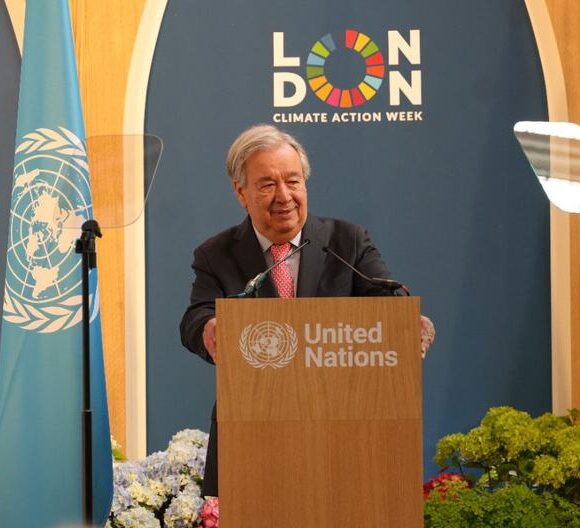
“London isn’t just calling, it’s cooking”
– Antonio Guterres, UN Secretary General
With more than 1,300 events planned and over 100,000 attendees expected, LCAW 2026 was set to rival, and potentially exceed, New York Climate Week as the world’s largest climate gathering. The extreme conditions inevitably disrupted attendance, but the level of activity signalled from the outset that attention and investment are now hyper focused in this region.

At Anthesis, we too rose to the occasion of the most ambitious LCAW to date, hosting nine sessions over three core days and our own teams visited more than 100 events over the week.
With more than 500 people registered for our sessions, we planned our agenda around a variety of topics, formats, and times of day to offer something for everyone.
The programme combined technical depth with practical application. Discussions ranged from decarbonisation protocols over breakfast, to hands-on ISSB reporting workshops, to a sustainability marketing session where participants created radio campaigns in real time.
The air-conditioned basement of our London offices may also have been part of our allure. As temperatures rose, our office became a welcome space for continued conversation, with many attendees staying on for the following sessions. And the ice creams we served on the doors as the week hotted up were less of a bribe and more a reward to those who made the gruelling journey on London’s public transport in the searing heat.
Here’s a recap of some of the sessions we ran across London Climate Action Week 2026.
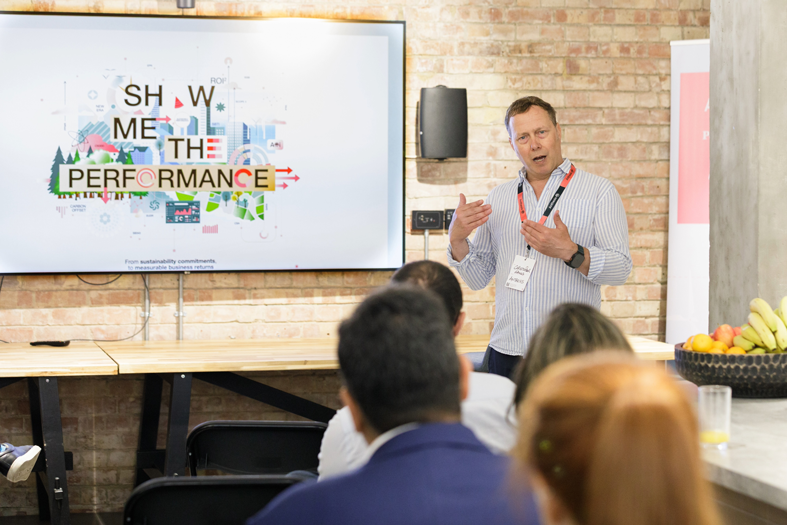
Our very first session focused on how organisations are structuring credible carbon strategies in a fast-changing market. Led by Christopher Hakes and Lebona Vernon, discussion centred on how instruments such as carbon credits and renewable energy procurement fit together, and how the evolving SBTi Net Zero Standard is reshaping expectations on quality and impact.
One of the questions, we consistently heard asked was how to balance cost, risk and credibility in decision-making.
The attendees were highly engaged throughout, with discussion continuing well into the Q&A. Most of the audience were already active in carbon markets, but confidence in assessing the quality of the instruments procured was low, meaning there was a shared challenge across the group.
Key takeaways:
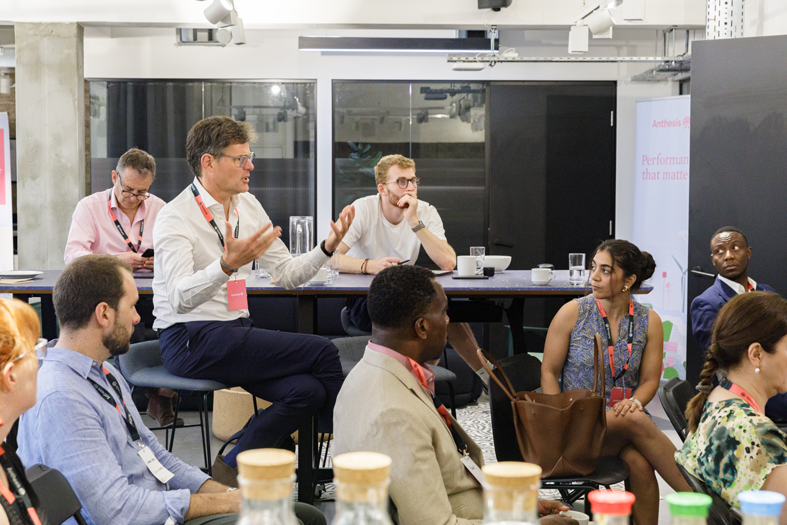
In this session, we explored how organisations can balance structured, data-led approaches with more innovation-driven decarbonisation. The discussion focused on how both can work together to deliver credible plans alongside faster progress.
Our facilitated roundtable format, led by Ellen Upton and Arjen Struijk, created an open and practical exchange, with strong participation across sectors. The energy was collaborative, with participants sharing where they are seeing progress and where barriers remain.
Key takeaways:
Read our latest Carbon Guide for further information.
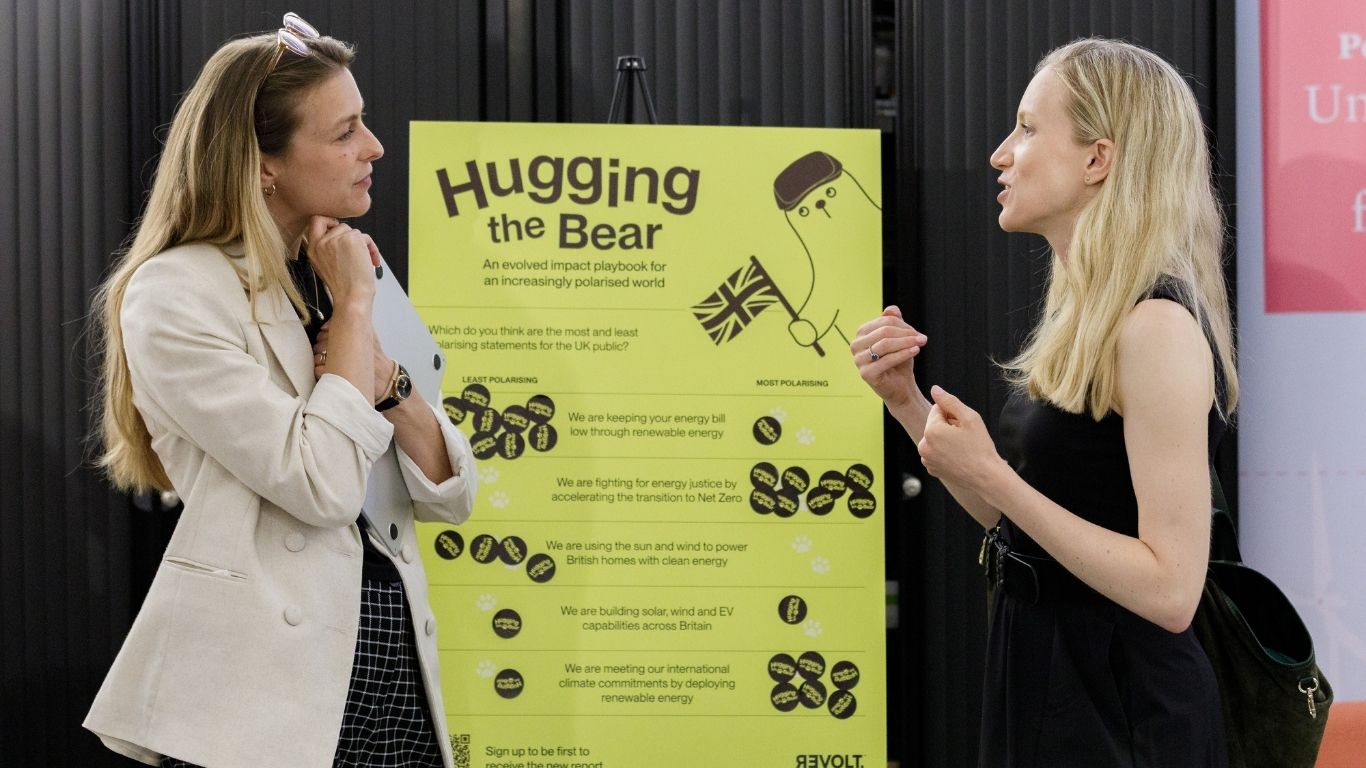
This session presented a brand-new British bear to audiences, following the success of our Hugging the Bear report, based on US data. Building from profound findings of our analysis of US consumers into what sustainability language polarises us, at LCAW we showed for the first time the equally compelling British data.
We shared the findings of our UK research with attendees from brands such as Sonos, WWF, DANONE and Diageo. Alongside industry professionals, there were academics, investors and communicators, as well as a younger crowd, serving as a reminder that at its heart LCAW is a community event.
The focus was on how organisations engage audiences on sustainability without creating division or undermining trust.
Breakout groups were tasked with creating their own radio ad for an eco-product using HTB principles. The winner? A northern speciality, a plant-based pork pie!
Key takeaways:
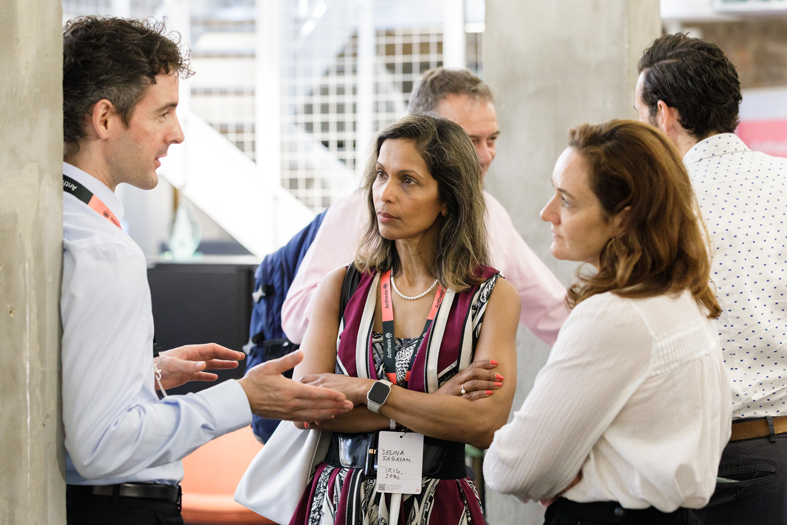
This panel, featuring the Cradle to Cradle Products Innovation Institute and Diversey, explored how product sustainability is shifting from a niche function to a core commercial driver.
The discussion focused on the role of certification and verified data in supporting growth, managing risk and strengthening supply chains.
The conversations also emphasised rapid changes in consumer expectations and digital influence, with growing demand for transparent, verifiable data on product impacts.
The conversation reflected a strong sense of momentum, with attention on how quickly expectations are changing. Demand for more accessible and reliable product data is increasing, shaped by both consumers and digital platforms.
Key takeaways:
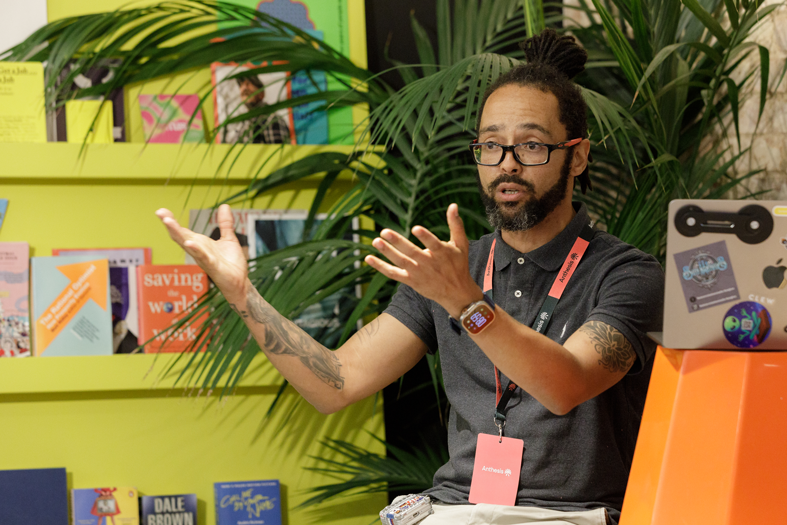
This session brought together Michael Barnes and Rebecca Furlong from Anthesis, alongside Sarah Davidson from Croda and Huw Barry from Heathrow, to explore one of the most persistent challenges in corporate sustainability: improving the quality of Scope 3 emissions data through supplier engagement.
The discussion focused on how organisations can move beyond spend-based estimates towards supplier-specific emissions data, where to start, and how to approach data requests in a practical and proportionate way. Collaboration, methodological alignment and the role of digital tools emerged as recurring themes.
The session attracted a highly engaged, cross-sector audience, reinforcing that the Scope 3 data challenge is not confined to any one industry. Questions focused on how to secure C-suite engagement, where to start when suppliers lack emissions data, how to assess data quality and verification, and how service-based organisations can approach Scope 3 reporting. Many attendees found it reassuring to hear organisations across different sectors grappling with the same challenges.
Key takeaways:
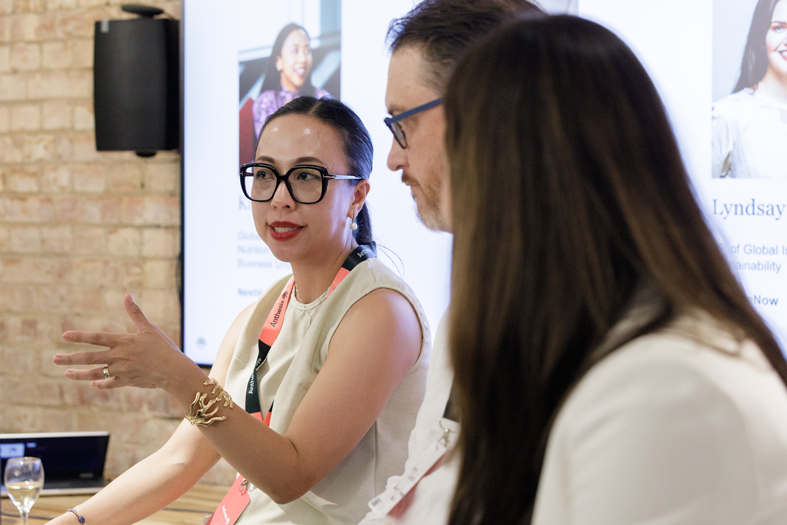
A world class panel was brought together for this session featuring Lyndsay Harris Kyei from ServiceNow, Kevin Eckerle from Bayer and Kristine Patricia Libarnes from Nestlé to explore how organisations convert ambition into delivery.
The discussion focused on positioning sustainability in commercial terms, with links to revenue, risk and resilience, and how to build traction across the business.
One of the sharpest observations from our panellists was that leading with values-led messaging may have done sustainability a disservice. The moral argument is losing its power in boardrooms, and it arguably should never have been the backbone of the business case.
This session was particularly lively throughout, with humour from the panellists and strong engagement from the audience – for example, the conversation around impact-linked compensation sparking genuine debate.
Key takeaways:
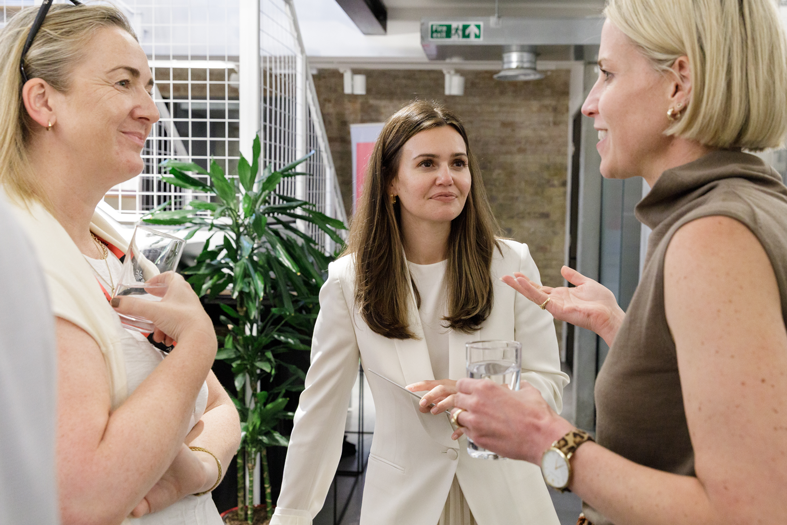
This session presented early insights from two major research initiatives, exploring how sustainability is evolving.
Together The Shape of Sustainability and Show Me the Value of Sustainable Marketing offer insight and inspiration for how sustainability teams can drive change across organisations.
The discussion looked at how the sustainability landscape is changing, how AI is reshaping the function, and how the sustainability team is perceived across different parts of the organisation.
The teams the CSO thinks they collaborate well with, do not necessarily reciprocate the sentiment – with IT and marketing being particular points of friction.
It was the most subscribed to session of our agenda, with standing room only and strong engagement from the varied audience this event attracted. The initial response to the new research pieces was positive with many signing up to be among the first to receive the new reports in the autumn.
An interview with Ilaria Lenzi at Nestlé Waters added practical insight and the view from inside an organisation that has sustainability high on its agenda.
What was particularly valuable was hearing how Ilaria approaches collaboration between sustainability and marketing teams. Hint – not all the audience needs to receive all the messages all the time!
Key takeaways:
Register here to be among the first to receive the Shape of Sustainability report.
Sign up here for the Show Me the Value of Sustainable Marketing report in collaboration with the WFA, Oxford Saïd Business School and Kantar.
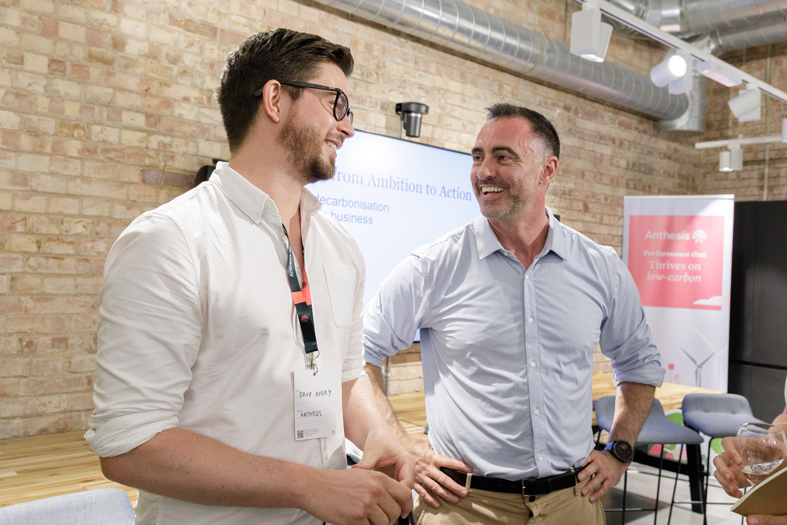
This session looked at turning ISSB requirements into decision-ready insight with session leaders, Roohi Ghelani, Renata Ulloa, Damian Regan and Charlotte Buckingham using interactive breakout rooms focusing on the four topics ISSB reporters find most challenging: defining materiality; quantifying anticipated financial effects; data quality and streamlining reporting; and linking sustainability & financial reporting.
ISSB-related reporting is moving from a compliance exercise to decision-useful management information, but there are still practical barriers.
Participants across private companies, investors, academia, regulators and standard setters agreed materiality is central to this and remains hotly contested.
Different stakeholders prioritise different issues. Investors may have different expectations around how frequently DMAs are refreshed. Companies need better ways to link risks, opportunities and supply chain perspectives to existing risk and finance processes.
The session also looked at how quantifying anticipated financial effects remains uneven: physical climate risks are more mature, while transition, nature and social risks are often qualitative in nature.
Key takeaways:
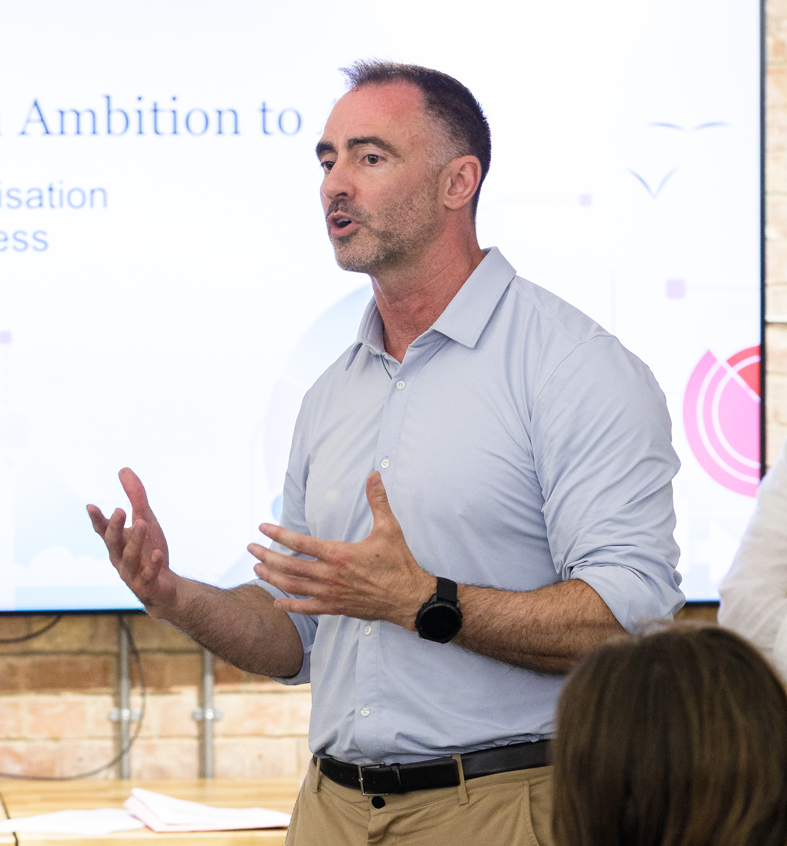
“The role of global sustainability leaders is shifting. How leaders lean into that may well be the difference between playing defence and unlocking real, durable advantage.”
– Dr Matthew Bell, Group CEO, Anthesis
This year’s London Climate Action Week was bigger, busier and more ambitious than ever before. That growth seemed to mirror the urgency of the moment itself. As climate impacts become more visible, the response from business, policymakers, investors and civil society is also accelerating.
Across our sessions, the topics varied widely, from carbon markets and circularity to reporting, marketing and organisational design. Yet a common thread ran through almost every discussion. Organisations are looking for practical ways to embed sustainability into decision-making, build resilience and create value in a changing world. The conversation centred around how to deliver this at speed and scale.
And as the soaring temperatures gave rise to the city’s hottest June on record, the growing scale and ambition of London Climate Action Week felt less like a conference milestone and more like a reflection of what this moment demands. The challenge is growing. Encouragingly, so too is the response.
London was calling. This year, more people than ever answered.
We are the world’s leading purpose driven, digitally enabled, science-based activator. And always welcome inquiries and partnerships to drive positive change together.