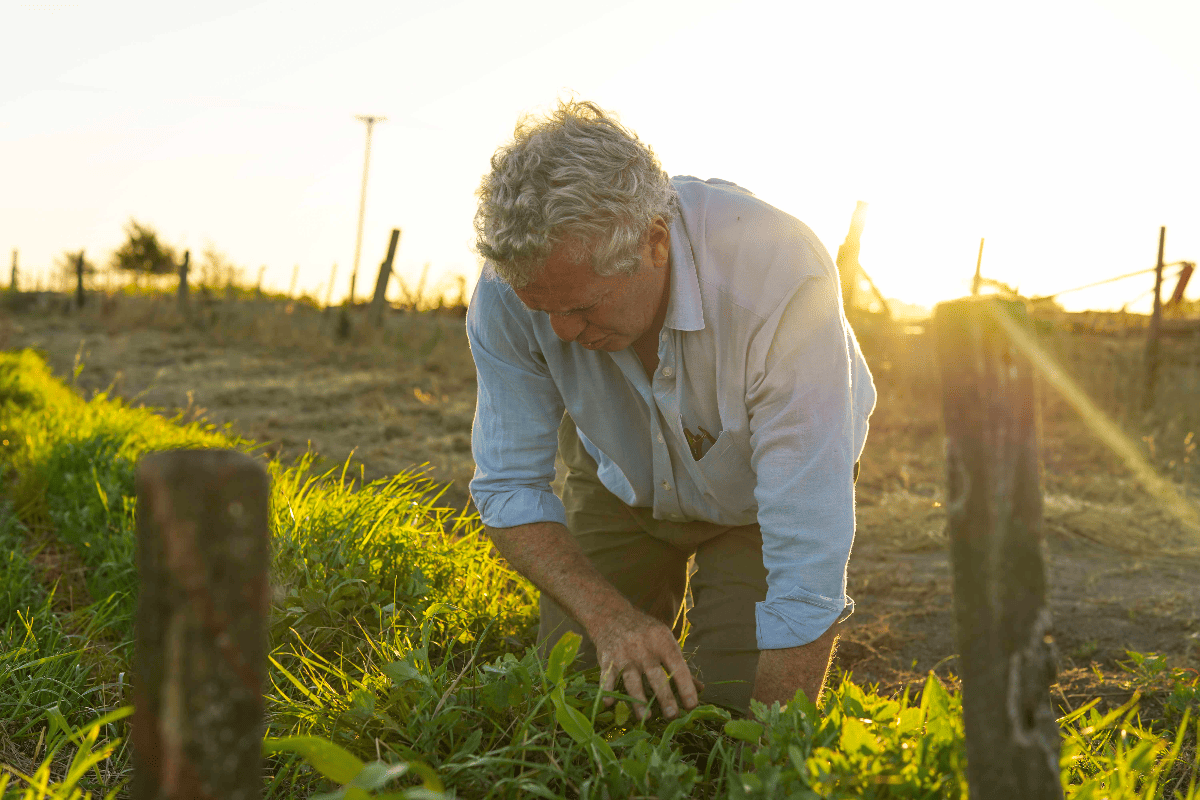
SARA: How Regenerative Grazing Is Transforming Communities, Nature and Climate
Activating Sustainability | 29 September, 2026 | Ep. 69
Pablo Francisco Borelli – CEO, Ruuts
Geert Eenhoorn – Director of Carbon Projects for Europe and Latin America
Chris Peterson – Director, Anthesis North America
In this episode of Activating Sustainability, host Chris Peterson is joined by Pablo Francisco Borrelli, Co-founder and CEO of Ruuts, and Geert Eenhoorn, Director of Carbon Projects for Europe and Latin America at Anthesis, to explore the South American Regenerative Agricultural Program (SARA). Together, they discuss how regenerative farming practices, carbon markets, and community-led collaboration are helping restore ecosystems across Latin America while creating more resilient farms, supporting rural communities, and generating long-term environmental, social, and economic value.












Chris Peterson: Hello, and welcome to Activating Sustainability, the Anthesis podcast, where we take deep dives into the sustainability issues that matter to help businesses turn ambition into action. I’m your host, Chris Peterson. When we talk about sustainability transformation, it’s easy to focus on individual solutions, whether that’s carbon reduction, biodiversity restoration, or new financing mechanisms.
But lasting change rarely comes from a single intervention. It happens when entire systems begin to evolve. In agriculture, that means rethinking not only how land is managed, but also how farmers make decisions, how communities share knowledge, how capital flows into rural economies, and how businesses create long-term resilience in the face of growing environmental and economic pressures.
Today’s episode explores exactly that. Through the South American Regenerative Agricultural Program, or SARA, we’ll examine how regenerative farming practices, carbon markets, and community-led collaboration are working together to restore ecosystems across Latin America. But beyond the environmental outcomes, this is a story about systems change in action, creating more resilient farms, opening new revenue streams, strengthening rural communities, attracting the next generation into agriculture, and improving livelihoods in ways that extend far beyond carbon. Joining me are Pablo Borelli, or Bana, Co-founder and CEO of Ruuts, and Geert Eenhoorn, Director of Carbon Projects for Europe and Latin America at Anthesis. Together, they share what they’ve learned from building a program that demonstrates a critical lesson for sustainability leaders everywhere: meaningful impact happens when environmental, social, and economic value are created together.
Let’s dive in
Chris Peterson: Welcome to the podcast, thanks so much for joining
Pablo Borrelli (Bana): Thank you, Chris.
Geert Eenhoorn: Thanks, Chris. Thank you very much for having us.
Pablo Borrelli (Bana): Yeah, thank you
Chris Peterson: Well, great. Maybe a nice spot for us to start is, Bana, could you provide us a little bit of an overview of SARA and how it came about?
Pablo Borrelli (Bana): Great, so SARA is a carbon program that we are jointly developing with Anthesis and Ruuts. And it aims to restore and to put under regenerative grazing 500,000 hectares of land in Argentina, Paraguay, and Chile. And it’s the result of the combination of more than 15 years of working on the ground with farmers in their transition to regen grazing and all the knowledge that Anthesis had on carbon markets, and putting these things together to catalyze this change, at a farm level. So, it’s a big opportunity to accelerate this transition that is very much needed.
Chris Peterson: No, it’s great. And so exciting to see that combination of kind of on the ground and the technical expertise coming together. And I know Bana, something you often talk about is that sense of system change, right? You talk about 15 years working within the space, et cetera. I know Geert, you’re always thinking about long-term again, system change.
And I’m curious, as you think about the program how do both of you think about that ambition of system change versus maybe simply carbon sequestration?
Geert Eenhoorn: Yeah, So for me, when I first met Bana and his father, I was introduced through an old schoolmate of mine, and it immediately clicked. We’re really lucky to run into the people of Ovis 21 and Ruuts. And the hard lessons that Pablo Senior learned, and from that, how he built up this idea of holistic grazing and started implementing that, that was a basis for us, a beautiful basis to build on and to add carbon to it.
They had problems in really scaling it, and the moment we started to add this carbon angle, it allowed us to think bigger and to start growing and to really work it as a programmatic level. But without what they already had, basically 20 years of real experience of really doing it, working with the farmers, and building out that systems change, that’s their merit.
And then when we started discussing that and how we saw that future, we oftenly joke like, “Okay, I think we’re basically talking about a marriage contract here.” It’s a long-term partnership, an equal partnership, and that is how we have worked from day one and it is working very strongly because everybody is really hands out and really doing it.
Pablo Borrelli (Bana): Yeah. Just to add on that about the system change, I think the degradation of ecosystems due to food production is a major driver of land transformation. It all has to do with decision-making. We have people, farmers that they own the land, and the way they make decisions will drive this ecosystem to thrive or to degrade. So, it’s a behavioral change challenge that we are facing, and that’s the big challenge that we’ve been trying to build the architecture in how do you make behavioral change transformation at scale. And since my father started to work on regen grazing and with Allan Savory’s ideas back in 2008 during the first trials of what’s this about mimicking nature with herbivores, and they had incredible results. But the challenge was always how do you make a farmer change the way they do things? And it’s a very traditional, industry where knowledge is coming from generations and things have always been done in a certain way.
So, we started finding the different bottlenecks and it all started with training people, bringing new capabilities and ways of doing things to farmers. So we created a school, and then we had people from different parts of the country asking, “How can you help me in this transition?” So, we created a network of field professionals that can provide local services. You need to be close to the farmer to do this. But we were still struggling in scale and how do we bring more incentives? How can we bring more money and capital for this to grow at the speed that it needs to grow? And that’s where we found Anthesis and the carbon markets as a catalyzer for all this growth.
System change needs people on the ground that knows how to do this and building community and peer to peer, and that farmers feel comfortable in doing this new step, and you build things on top of that. And so, it’s bringing all this architecture in place so that change can happen at scale.
Chris Peterson: Yeah no, it’s such a beautiful thing, and I think so many people talk about scale and transformational change and system change, and it’s fascinating to be able to dig into this. And I’m keen to pull out some of the lessons from that. But maybe before we do, looking at this through kind of carbon programs and carbon activities and sequestration efforts, everybody talks about impact. And I’d be really curious to hear, as you think about SARA, what really makes this program different and how are you approaching that piece of kind of impact?
Geert Eenhoorn: For me, that starts with the whole idea of how can a farming program capture carbon? And basically, carbon is one of the main elements in the soil, and healthy soils have a lot of carbon. It literally gets blacker, as you get more carbon. So basically, carbon is a very good proxy for healthy soils, and Ruuts and Ovis were building healthy soils. And we’ve got luckily, when we got into contact to each other, Verra – the Voluntary Carbon Standard – Verra, had just launched a methodology that we could use to quantify that carbon in the soil and turn it into a carbon asset, into a carbon credit.
So, the proxy is there, but the proxy itself is not enough because you can also start to manage purely on carbon, and you can also mess up the system. But the good thing is that Ovis 21 already had in place a monitoring system, they call the GRASS standard, where they monitor sixteen biodiversity indicators.They do it on an annual basis, every year they do it with visual observations, but they keep scores for those. And once every five years they do an in-depth testing, soil testing, water penetration testing, et cetera. You see that on all those parameters, on all those biodiversity indicators, things improve.
But we also see now from our first monitoring period that fertilizer use decreases. There’s not a lot of fertilizer being used, but it decreases. Fuel use on farm decreases. We see that the productivity goes up without extra inputs. The need for feed goes down. Even the need for preventive medicine goes down. So these are all impacts you see. But I think the most important one that I saw in the visits that I had was what it does to the people. It literally changes their life. They get more relaxed. They’re more resilient with hard circumstances. There was some huge droughts in the project area during the first years of monitoring of our project implementation, and they survived that better than neighbors did. We visit farmers we saw dead animals on the neighbors farms. Neighbors had to sell their cattle, and our farms didn’t. And that is amazing to see that happening. People literally had easier lives. Still not easy in Argentina and Chile and sometimes with economic situations, et cetera, but it did change their lives. It moved the needle.
Pablo Borrelli (Bana): Just to add on that, I think, one of the impacts I like most is in the dynamics of farming there’s a huge social impact that is regarding the new generations. The average farmers in this region have 70 years. So what you see with this change is new generations getting interested in farming and in being part of the decision-making of the farm.
Most of the farms we work are family-owned farms. And also there’s a huge impact on the role of the employees on the farm because now their observations and their work in making all the mimicking of herbivores and allowing the grasslands to recover and what they see at the farm level, it becomes very important and relevant. So they sit down with the farm owner in the decision-making, and that’s a dramatic change in the dynamics inside the farm. And something that it’s also very important regarding impact and permanence is that because we’re working in a paradigm shift in how these farmers understand their business, it’s something that it’s not a practice that now you do this, you’ll get carbon, and in two years, if there’s something else, you’ll do something completely different. They’re changing the lens through which they see their business and that’s permanent. That’s an everlasting impact because they won’t go back to where they were before and that’s something I’m very proud that this project is bringing down.
Chris Peterson: it’s incredible, and it speaks to that sense of transformational change and the longevity of those efforts and the sticking power. And I’m curious if those are the pieces that really jump out to you as we think about a carbon sequestration program and talking so much about community and farming practices and generational interest in farming, et cetera.
And so I’m curious from both of you, what is it that you feel is so valuable or critical about having that community success as part of how you all are thinking about the success of this program?
Pablo Borrelli (Bana): It’s…for this kind of change to happen at scale, you need to build community because the way a farmer decides to join a program like this or to make a shift in their management, it really depends on feeling that they are part of something larger, that they have other peers doing this, that this is a movement and that they can find people in their region doing something similar. They can share what’s happening and learnings. So it’s like, everything is connected. If we want to do this change at scale, it needs to take this larger view of the communities to change. Farmers won’t change independently, like isolated things. They need all this background and the community either benefits or they get impacted by what’s happening at the farm level. So, it’s very important to get the community involved in all this.
Geert Eenhoorn: No, I agree. And if you talk to a farmer and ask, “Why are your neighbors not transitioning as well?” They say, “Yeah, but they went to university, and they stick to it, and, the other neighbors are still doing it that same traditional way as well.” You have to be very strong or have a very strong backup, really being backed up in order to then stand your ground. And that is, I think, what this program brings. Not so much this program, but the whole structure that Ruuts has built together with Ovis, with that regeneration school, with the field professionals through a hub and spoke network close to the farmers. Those sessions that they have twice per year at every farm where we sit with a farmer, and with the farm people, and they plan. They have a two-day planning session for the next half year. And indeed, as Bana said, the farmhands, they speak up. And in some farms, it was really traditional, where you had the owner, the patron, and the farm people didn’t dare to speak. They just said, “Yes, sir.” And that is changing incredibly.
And then the last thing that, that I find remarkable as well, if you look at the amount of social media generated through the nodes, through the field professionals, through the farmers themselves, and through Ruuts and Ovis, these beautiful stories put out there on Instagram and on LinkedIn, et cetera, telling that story. So it is a very strong community that’s been built on all these different aspects.
Chris Peterson: Yeah, it’s fascinating, and maybe as we think about the long-term implications of that, you know, does that have an impact on the viability of the credits and the long-term impact around those? And I’d love to hear a little bit more on that.
Geert Eenhoorn: Yeah. So, permanence I don’t know to what extent you know that, but for a carbon credit, a carbon removal credit, permanence is key. If a farmer would fall back to his old habits and the sequestered carbon is lost, you basically have a reversal event. One of the ways of solving that is through contracts, but a contract is only a contract as well. And, you know, you can’t force a farmer into signing a contract for 100 years, and we kind of want to achieve 100-year permanence. So for me, this community build that we’re doing and the whole infrastructure that’s being built is as important, maybe more important, than the contractual side of things.
We have built this movement. It’s strong. It’s embedded. Farmers won’t revert this quickly because they see things happening, and they get the stories from their companions and they will move forward. If these would’ve been isolated cases or more opportunistic approaches, or if you didn’t have those bi-yearly visits, that all comes under pressure. So, I think having that is a strong guarantee that people will continue doing this. Also the example that Bana just gave, you know, you see younger people coming back to the farm. Bana, I think pretty sure you have some ideas on that as well but, yeah.
Pablo Borrelli (Bana): Yeah, one of the things I’m very proud is that through this program, we are also educating people at rural schools. So we are teaching the younger generations about this new way of farming. And so they are already starting from scratch with all this new paradigm in their mind.
So if they go and start working at a farm or they go to college, to agriculture engineering, they already have this different vision about things. I’ve heard so many stories from the farm, like simple things like farmers that take holidays for the first time in 10 years, because they were able to plan their work and to really think about why they are doing what they do and have a context to the decision-making and that now they were able to organize their lives and to take holidays. It’s very simple, but it’s significant at a family level. And you listen to stories like this that are very simple but incredible. And it’s all about bringing a new framework for the decision-making and why they are doing what they do, with their farm. Other stories of farmers that were about to go bankrupt, coming from a model of a lot of investment upfront to keep very high productivity levels, and now changing completely their business and now like they say, “I can rest,” you know? “I was in a, situation where I was… it was so stressful, and now I’m producing grass for free just by managing and mimicking nature.” And all that noise is not there anymore and it’s changing their lives. There’s no way that these people is going back to where they were. It’s just this is staying forever here.
And a lot of generational stories, like the second generation in this transition of father is about to stop being the one making the decisions at the farm and they need the next generation to, to step in. And that’s where we see the gap of new ideas because they are not coming from old ideas of how to do farming. So this generation convincing their father, “Hey, we could do this, and we can try here.” And the father is like “This is not gonna work,” and then they start seeing results, and by the end, the father is the ambassador of all this change. And it’s,those stories, they repeat once and again, and I really think it’s paying off all the work at the end.
Geert Eenhoorn: Yeah, for me one, one beautiful anecdote is we were visiting a farm in the middle of a drought or just after the drought had its most severe period. So, this was beginning of 2024. And the man told us that his daughter at a certain moment wanted to buy sneakers, expensive ones, nice ones. Cost him a load of money, and he said, “Well, for that money, I can buy three calves because at this moment everybody around us needs to sell off their animals because they just can’t maintain more stock. So, I could buy three calves for the same amount of money that you wanna buy a pair of sneakers.”
And actually they decided to do that. He bought the calves. He raised the calves through this drought period. He had enough feed to sustain a larger herd. And then after a couple of months when the cattle had to be brought to market, he could sell whereas nobody else had something to sell. So, he sold at a better price. So this was a double resilience. He had more money. His daughter could buy two pairs of sneakers for the same… Now even more than that actually, but he also wanted to keep something behind. But to survive a drought, an extreme drought, in that way, it’s a beautiful example of how this really is material to people. They see the difference as well, they see it happening.
Chris Peterson: Thanks for sharing those stories. I think they’re really beautiful and, maybe to bring it back to more of the quantitative side, and Geert you had mentioned kind of the Verra standard and their approaches to measurement. I’m curious, what are some of the other ways that you measure the success beyond or including carbon? So around biodiversity and impacts on the community, et cetera.
Geert Eenhoorn: No, so indeed, one of the things we have to monitor because there are emissions associated to it, is the amount of cattle. Because we can host more cattle on the land, but they always also emit more enteric fermentation. Through enteric fermentation, they emit more methane emissions.
We monitor that and we see that amount goes up. Now, luckily, the sequestration of carbon is even larger than that, so we have a net positive result. But we see that the productivity over the first monitoring period from 2019 to 2023 increased by approximately 30%. That’s a huge increase of productivity with lower inputs. So they have to feed their cattle less often, so they have less movements of trucks. They don’t have to buy or, grow separate crops to cover a lot of the winter months, or at least much less of it. Those farms that use fertilizer use less fertilizer because the system maintains itself and keeps strong itself.
We further had, through different type of remote sensing, et cetera, we also see that the amount of fire, and that could be either human-induced fires because some farmers still have the practice of sometimes burning down grasslands, resetting a grassland, but it can also be natural fires just instigated through natural, systems, we see that the amount of fires really decreased dramatically. I mean a very strong reduction of fires, not only against the baseline, but against the performance of the farmer, against their own previous years. We’ve done research that shows that there’s significant less fire there. And indeed that the whole drought system impacted our farms just less. We had more, green masses. If you do remote sensing through NVDI, we have seen a significant positive change on the amount of greenness of our lands compared to the surrounding areas during the implementation of a project. And this is hard evidence science.
Pablo Borrelli (Bana): I would like to do a double-click on, on how the monitoring works or how we measure, ’cause the monitoring has different purposes. One, of course, is to measure impact, for the claim of the carbon and all the co-benefits. In that sense, we do a long-term monitoring, we measure plants biodiversity, water infiltration, and soil carbon, and that we do every four or five years.
And then we have the short-term monitoring that, as Geert was saying, is 15 indicators. And one of the reasons we do the short-term monitoring is it’s impossible to do adaptive management without a monitoring that can tell you if the decision-making that you are doing at the farm level is actually generating improvements or not.
Many times you see these things separated. You have the monitoring just for the carbon, and then the decision-making at the farm level is not informed, so it’s impossible to plan and to make informed decisions if you don’t know what’s happening with the health of that grasslands and the decisions that you’re taking.
Do we rest 15 days in summer or 80? Should we put this amount of cattle or this? All these decisions that are done with the field professional and the farmer need to be measured against metrics that can tell if we are getting the results that we want or not. Soil carbon is very slow in this sense.
So those indicators where we see if we are improving the soil erosion or the amount of soil that is being covered by plants, or how is the dung of the animals being decomposed, or the activity of insects, all those are indicators that we can see, and we have a score, and we can tell this farm is doing better this year than it was last year, and that can inform if the planning that we’re doing, is working well, we are doing well, or we need to adjust things. It’s a leading indicator, but it’s very, very important for us for the decision-making at the farm level and also at the programmatic level if we want to expect to capture carbon, all these indicators will correlate with soil carbon. It’s this integration approach to monitoring that makes this very robust and that we need data for different uses.
Chris Peterson: I love that overview and clearly the holistic thinking that has gone into this. I’m conscious of time, so maybe to pivot to where do you see this going?
Pablo Borrelli (Bana): My short answer would be my dream is to be out of business in this sense. We have to achieve the 20% of common practice, and then we are done. You know, like, we can’t get any more farmers in here. This is, this is common practice now. That would be my dream, that we can get there.
Geert Eenhoorn: I think, yeah, for me also if this can become common, that would be a fantastic achievement. There’s still a long way to go. And honestly, the current markets have not been easy on us. But if we could value what is happening here at large scale. The current area under management for our program alone is really the greater London area. But if you look at combined with the different programs and the reach of our nodes, we’re talking about millions of hectares that we already have within reach. We can do that, but at the same time, we have an expensive system that needs to be maintained, and carbon revenue is important. So, if we could get revenue and recognition for that with the carbon credits we sell, I think we can accelerate this. This already is an unstoppable thing, but I think the acceleration and how quickly we reach that common practice level, because as Bana said, the 20% means that once we reach 20%, we can’t claim carbon anymore.
That is how the carbon markets have decided this should work, and that’s fine with us because it still gives us a lot of way to work. But the sooner we reach that, the sooner we can retire, right, Bana? And that would be better for me than for you, but that, that is indeed a very much an ultimate goal.
Chris Peterson: Well, I will certainly, volunteer to join you guys in toasting your success. But before we wrap up, I’d be really curious to hear, for those who have been inspired through this conversation, we really started talking about system change. And part of what I love so much about this program is that concept of both how do we achieve credit, but how are we also embedding the systemic change and transformational change that we need.
And so I’d love to just hear from both of you, taking that step back and thinking bigger. So many of our listeners are thinking about systemic change, how they drive that within their industry, within their scope of control, within their roles, et cetera. What are a few key lessons that each of you have taken from this experience of what does it really take to be able to achieve that?
Pablo Borrelli (Bana): Yeah, I think for us, the purpose of making this change at this level of being part of something bigger than ourselves and bringing this systemic change, is this conviction that it’s the right thing to do, and that’s the main driver. And I think without that, it would be very hard. I see these two forces now working at the infrastructure level, and those catalyzers like the carbon market. We need catalyzers working and bringing all the capital for this to happen in the next decade. But we also need to work at the infrastructure level so that we are ready for those catalyzers to scale. We need both things, at the same time, and that’s part of the challenge.
Geert Eenhoorn: You have to commit with passion and really start doing it. And you know the first time you never get it perfectly right. There’s always room for continuous improvement. If you start waiting for the perfect moment, you’ll never start. So you have to get moving, and we did that. We learned the lessons the hard way. It took us much longer to earn the first credits than we ever had thought was possible, but we managed, and we were one of the first ones in the world to do it under the system. And we even did it twice. We also did it in South Africa, which is crazy that we did so much in those years.
But you need to do it. You need to be consistent. You need to continuously learn and improve. But it’s a journey. It’s not something to just say, “Ah, let’s do this for a few years and then be ready with it.” And I’m really happy to be on this journey, with Bana and his team, because indeed, it’s so satisfying to see how it’s really happening.
And I really hope we can continue doing this, having this journey and have this enthusiasm jump over to the other projects we have into other parts of worlds where we’re not busy yet.
Chris Peterson: Amazing. Well, maybe that’s the best spot to leave it. And I feel like I’m going write down what we just went through and put it up on the wall. So thank you both so much. Really appreciate the insights and all the work you’re doing on this project
Pablo Borrelli (Bana): Thank you, Chris
Geert Eenhoorn: Thank you, Chris. Thank you, for having us.
Chris Peterson: And thank you for listening. Please be sure to check out the resources linked in the show notes, including a short film featuring SARA farmers, along with links to SARA, Ruuts, and Anthesis carbon market pages. Thanks again, and take care.