California SB 343 and What it Means for Your Business
The Truth about the "Truth in Labeling" Law
2 April 2026

The Truth about the "Truth in Labeling" Law
2 April 2026

With a flurry of regulatory activity in the packaging space this year amidst the revving up of Extended Producer Responsibility (EPR) regulations throughout the U.S., California’s Senate Bill 343 – the “Truth in Recycling” law – might be easy to overlook. However, the truth is that this law will have a serious impact on producers of both products and packaging doing business in California.
To meet compliance criteria, producers will need to consider the significance of changing labels, possible legal fees, and influencing consumer recycling habits. The regulation aims to address the conflict between on-packaging recycling labels and symbols with the realities of recycling infrastructure. Certain packaging types and materials may be widely considered as ‘recyclable’, but when the actual collection, processing, and end markets are evaluated, these assumptions may not ring true at the scale imagined.
Commonly known as the “Truth in Recycling” or “Truth in Labeling” law, California’s SB 343 prohibits companies from using the chasing arrows symbol or any other indicator of recyclability on products and packaging manufactured after October 4, 2026, unless certain criteria are met.
SB 343 directs CalRecycle, California’s department of waste and recycling, to publish data on what is collected, processed, and actually recycled in the state. This data provides key criteria producers must use to assess their products if they want to label them as recyclable. The first Material Characterization Study was published on April 4, 2025, with an update to the material types and forms being sorted by surveyed large-volume transfer/processing facilities and the counties served released on August 8, 2025. The law requires CalRecycle to publish this data again in 2027, and every 5 years subsequently.
CalRecycle, local jurisdictions, and producers all have key responsibilities under the regulation:
For a product or packaging to display the chasing arrow symbol or other recyclability labeling, it must meet the following six criteria:
Alternatively, if a packaging or product is handled through a state or federal law established program (such as a bottle bill), on or after January 2022, which governs its disposal and is determined to not contaminate curbside recycling or mislead consumers on its recyclability, it can be considered recyclable in the state.
Manufacturers and producers will be held accountable for evaluating their products and packaging.
Any manufacturer or distributor of a product that includes green claims in advertising or labeling indicating that the product does not negatively impact the environment or is providing some environmental benefit through language – such as ‘eco-friendly’, ‘green product’, or using the chasing arrows – will need to provide written evidence supporting the validity of these claims.
This evidence must contain:
Although SB 343 prohibits the use of chasing arrows without credible evidence, other states have conflicting laws that can pose a challenge for producers.
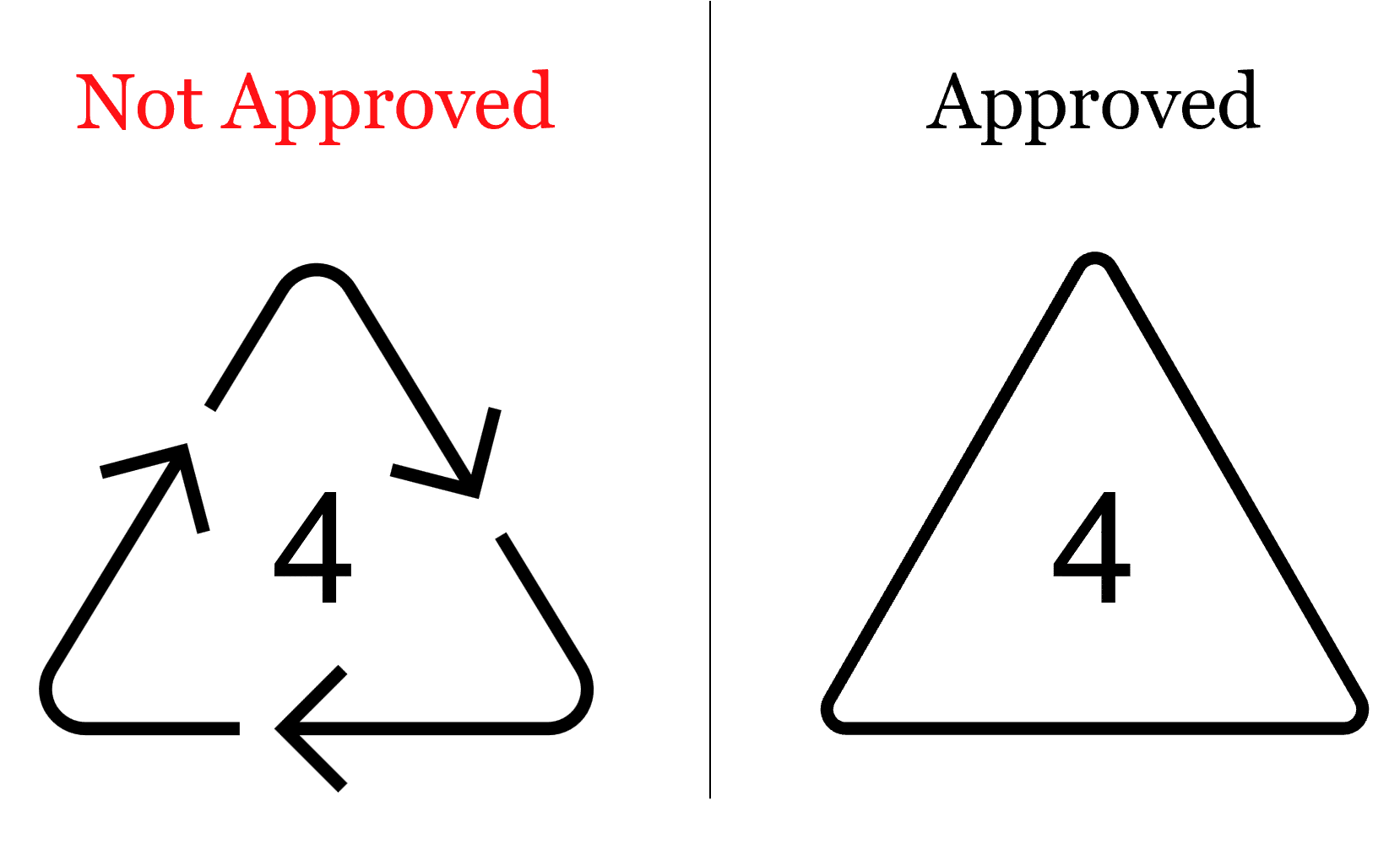
There are 29 states that mandate the use of chasing arrows with resin identification codes and others that will allow either chasing arrows or the unilateral triangle with the resin codes. If products do not align with the recyclability criteria, producers can utilize the solid unilateral triangle to identify the rigid plastic resin codes.
It is recommended to be aware of these discrepancies, considering explicit guidance for how to manage them has not been published.
With likely costs, supply chain constraints, consumer reactions, and the concern over adjusting labeling or choosing to abandon the chasing arrows altogether for fear of litigation, SB 343 is posing significant potential impacts on producers.
Evaluating your readiness and the potential risk exposure of your products and packaging is a strong first step to addressing these challenges. Anthesis supports clients in baselining products and assessing compliance readiness for local, national, and international regulations. We develop custom action plans and implementation strategies to mitigate risk and leverage client-specific opportunities.
We also help clients understand legislation and compliance requirements in context. For example, complimentary bills such as SB 54, California’s Plastic Pollution Prevention and Packaging Producer Responsibility Act, include ambitious recycling rate goals that could be impacted if producers choose to abandon recycling labels on packaging to avoid potential misrepresentations. By 2032, SB 54 requires:
There is connectivity between these regulations that will support the bolstering of recycling infrastructure and the circularity of packaging. Anthesis is well-equipped to assess your business’ relationship with these regulations, analyze your data, outline your potential risks, and establish a strategy for compliance.
Growing Extended Producer Responsibility (EPR) regulations are also interrelated with the data analysis needs of SB 343. Companies gearing up for EPR reporting should keep in mind how conducting the SB 343 analysis provides mutual benefits to their EPR reporting work as deadlines approach.
Key deadlines and practical action steps as EPR programs continue their expansion across the U.S.
We are the world’s leading purpose driven, digitally enabled, science-based activator. And always welcome inquiries and partnerships to drive positive change together.