One Framework, Many Regulations: Human Rights & Environmental Due Diligence
Exploring a unified due diligence approach
2 November 2026

Exploring a unified due diligence approach
2 November 2026


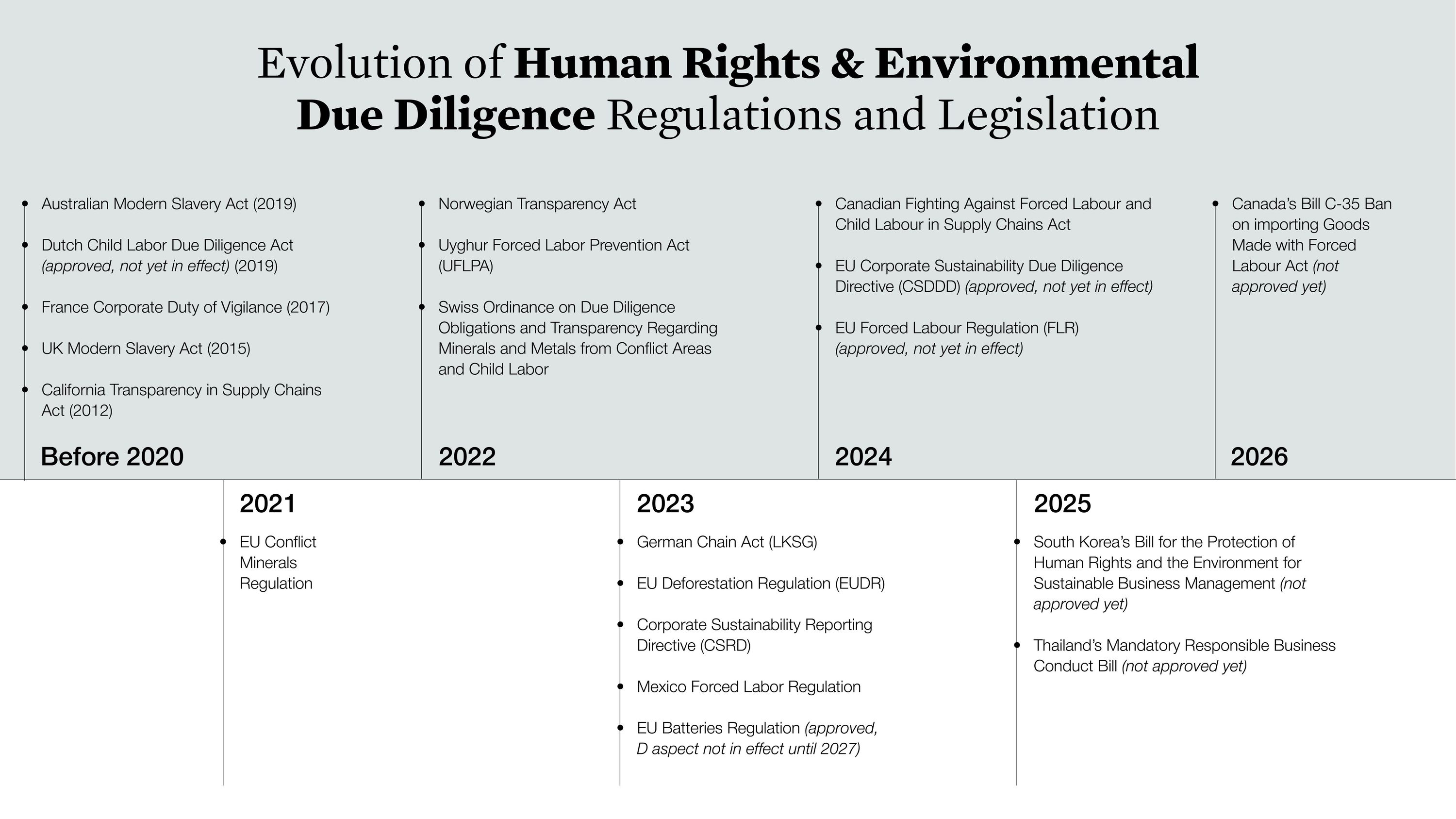
Over the last two decades, there has been a significant uptick in legislation related to sustainability and supply chain human rights and environmental due diligence (HREDD). These regulations reflect a broader shift from voluntary standards and initiatives to legal compliance, intended to ensure companies prevent, address, and remediate adverse impacts on human rights and the environment, regardless of internal commitment levels.
As regulation has matured, requirements have evolved from transparency and reporting obligations, such as the UK Modern Slavery Act and California Transparency in Supply Chains Act, to mandated due diligence processes, including the Corporate Sustainability Due Diligence Directive (CSDDD) and, ultimately, to import and market bans that impose business consequences for links to human rights harms, specifically forced labor, such as the U.S. Uyghur Forced Labor Prevention Act (UFLPA) and the EU Forced Labour Regulation (EUFLR).
These regulations enshrine the principles outlined in the United Nations Guiding Principles on Business and Human Rights and OECD Due Diligence Guidance for Responsible Business Conduct into law, effectively translating them into legal requirements with financial and business implications.
While the influx of regulations can feel overwhelming for businesses, establishing a strong HREDD system supported by supply chain traceability can prepare companies to confidently comply with emerging legislations.
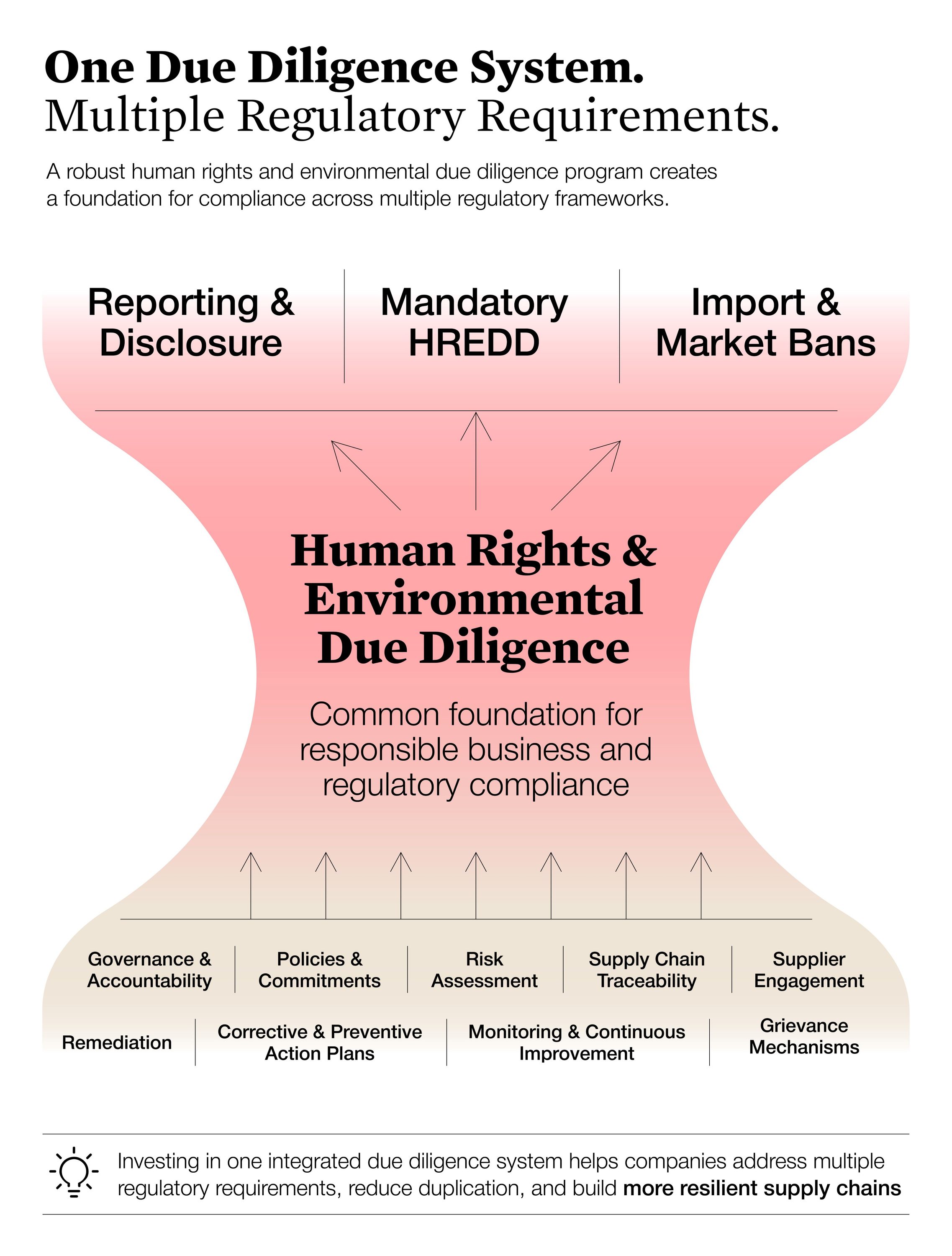
These laws require companies to disclose and report on what they are doing to address modern slavery and forced labor risks, as well as social and environmental impacts.
These laws require companies to identify, assess, prevent, mitigate, and remediate human rights and environmental risks across their operations and supply chains.
These laws prohibit products linked to forced labor from entering or being sold in key markets and require companies to demonstrate that their products are not connected to forced labor.
In addition to these specific supply chain and HREDD regulations, there are other laws that focus on different topics but also require a strong due diligence system to ensure compliance. These laws include:
How they are similar:
How they are different:
They each have different scopes, enforcement mechanisms, and intended outcomes.
Building a strong, integrated HREDD system is essential to meet a growing range of environmental, human rights, and trade requirements. While individual regulations may differ, many rely on the same core capabilities.
In practice, here are four key steps companies can take to get started:
Companies that invest in these foundational capabilities will be better positioned to navigate today’s regulatory requirements and adapt to evolving expectations.
For those who are new to human rights and environmental due diligence, our team can do a gap analysis and build an integrated roadmap to get you started.
For those who have been working on these topics for a while but in isolation, our team can connect the dots across existing activities, processes, and stakeholders to create an integrated approach to HREDD and regulatory compliance.
Finally, for those that feel prepared for upcoming compliance deadlines, Anthesis can stress-test your systems by checking your internal controls. We can also support with end-to-end managed systems for cross-regulation data collection, analysis, reporting, and disclosure, aligned with regulatory compliance deadlines and internal decision-making timelines.
Our Supply Chain and Human Rights teams are ready to use their expertise in human rights and environmental due diligence, as well as their supply chain data gathering capabilities, to help you identify, assess, monitor and manage, build and mitigate, and report.
We are the world’s leading purpose driven, digitally enabled, science-based activator. And always welcome inquiries and partnerships to drive positive change together.