Five Forces Shaping the Next Era of Business Strategy

Five structural forces are reshaping the business landscape. Separately, each presents a significant challenge; together, they are amplifying and accelerating each other in ways that traditional strategy frameworks never anticipated, and that most organisations are not yet equipped to handle. At Sustainability Business Live, Dr Matthew Bell, CEO of Anthesis Group, made the case for why that gap matters. The key question is not whether these forces are real. It is whether organisations can connect the dots quickly enough to build the resilience they need to thrive.
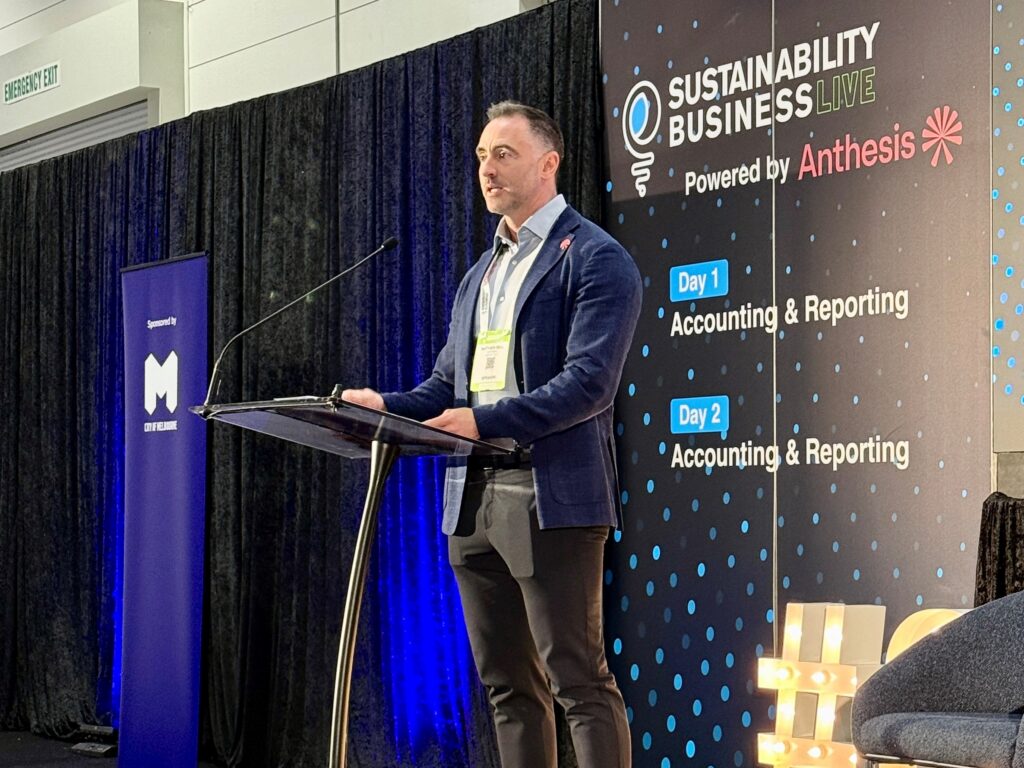
The disruption businesses are experiencing is not driven by a single trend but the interaction of five.
AI progress is striking but uneven. In 2025, AI systems achieved gold-level performance at the International Mathematical Olympiad and by 2026, advanced models had jumped from 2 percent to 48 percent accuracy on frontier mathematical benchmarks in just 18 months. Yet these same systems still struggle with basic tasks, such as reading an analogue clock with only about 50 percent accuracy. This shows that although systems are advancing rapidly, the progression is still erratic and hard to anticipate, rather than predictable.
This matters commercially. Research suggests existing AI could automate 57 percent of today’s work tasks. What makes this acutely uncomfortable, is that the tasks most at risk are not necessarily the ones that seem most routine, many are skilled, educated, higher-paid positions.
This challenges everything organisations assume about productivity, workforce design, and how value gets distributed. It also raises a harder question: what happens when core intelligence capabilities concentrate in the hands of a few firms?
The demographic profile of advanced economies has fundamentally shifted. The old-age dependency ratio has climbed from 19 percent in 1980 to 31 percent today, and it’s projected to hit 52 percent by 2060. That translates to roughly one dependent person for every two workers, a ratio no modern economy has ever sustained. The economic consequence, absent significant productivity gains, is a near 40% structural slowdown in GDP per capita growth across virtually all OECD nations.
This from the simple fact that the workforce supporting the dependent population is shrinking, while the dependent population is growing.

Every social system constructed in the twentieth century – pension structures, healthcare funding models, consumer demand patterns, and housing markets were designed for a world of growing workforces. Those systems are now operating in the opposite conditions to the ones they were designed for.
South Korea is a fascinating case study. A country of extraordinary innovation, cultural vitality, and economic achievement. Its fertility rate is around 0.72, the lowest ever recorded in any modern economy and less than a third of the 2.1 needed to sustain the population. The Bank of Korea’s own governor described it as “a national emergency,” warning of permanent negative economic growth after 2050.
As workforce growth slows around the world, strategies built on labour expansion will become harder to sustain.
The third force is the fracturing of social and political consensus.
The UN now describes rising nationalism, unilateralism, and geopolitical tension as direct challenges to the multilateral system. This is visible everywhere: trade, investment, technology, and industrial policy are increasingly being shaped by bloc logic rather than pure efficiency.
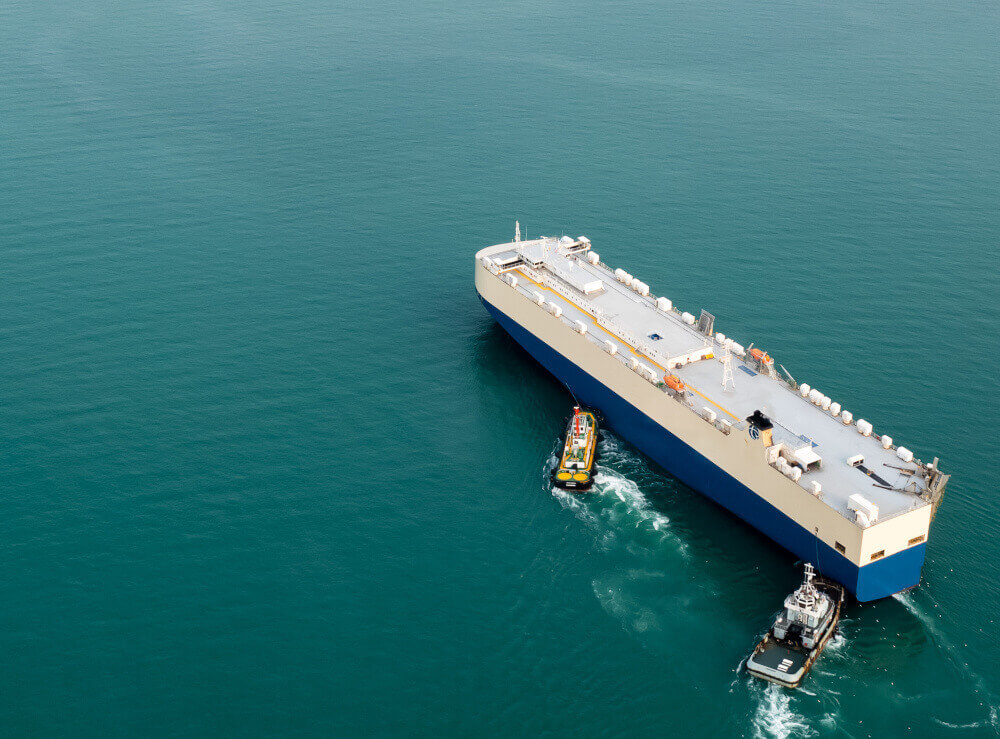
This changes the rules of business. Supply chains are no longer optimised only for cost but for resilience, alignment and political safety. Industrial policy, strategic autonomy and friend-shoring are back. Governments are leveraging economic choke points, prioritising economic security, and showing a greater willingness to distort markets in the name of national interest.
This matters because many of the assumptions built into 20 years of corporate strategy, such as stable rules, frictionless trade, predictable cooperation and converging standards, are being replaced.
Companies that built supply chains, talent strategies, and market assumptions around open globalisation are now operating across competing blocs, rising tariffs, and political risk that traditional efficiency models were never designed to price.
For business leaders, the implication is simple: you can no longer plan as if the global operating system will remain coherent.
The fourth force is the erosion of natural capital. Nearly half of global GDP depends on the biodiversity and ecosystem services that sustain it, yet critical ecosystem assets such as forests, wetlands and marine systems are in decline. Seven of the nine planetary boundaries have been breached, meaning we are exceeding the limits that keep Earth stable.

This is where nature begins to impact economic performance. Businesses depend on stable climate conditions, freshwater, soil health and biodiversity more than most balance sheets reflect. When these systems weaken, costs rise, supply chains become brittle, and assets become harder to finance.
Markets are now pricing physical risk faster than many boards recognise. As disaster losses rise, more of that risk is shifting onto governments, businesses and households, with around 48 percent of losses uninsured, exposing a growing gap.
Natural capital sits at the centre of this. Long treated as a free input, it is now being priced through markets: assets that cannot be insured, coastal property that cannot attract a mortgage, agricultural systems that no longer match rainfall patterns, and sovereign risk that increasingly reflects physical exposure.
Businesses that treat ecosystems as a source of resilience will outperform those that treat them as an externality and Boards that delay that reckoning are accumulating risk, not avoiding it.
The fifth force is the failure of today’s economic and capital models.
Our dominant systems still reward extraction, short time horizons, and narrow definitions of value. GDP counts activity, but not depletion. It rises when we build prisons or weapons and when we clean up damage, but not when we prevent it. It records transactions, but systematically undervalues or ignores the elements most essential to human flourishing – care, connection, ecological integrity and community.
This matters because a system can appear healthy while steadily undermining the conditions that sustain it.
We have spent decades optimising for quarterly returns, narrow efficiency and financial flows, while leaving major risks off the balance sheet. The result is a widening mismatch between what the model rewards and what the world requires.
This is where the five forces converge.
AI can concentrate wealth, demographic inversion can slow growth, political fragmentation can disrupt trade and cooperation, and natural capital erosion can damage the real economy. And all of it exposes the weakness of an economic model still built around incomplete accounting.
That is why many businesses feel as if they are dealing with separate problems when, in reality, they are facing a single system-level shift. The response cannot be incremental. It has to be structural.
These forces are already in motion and already producing consequences that most business strategy frameworks were not built to see.
It sounds like a daunting remit, however, there is a function in business already tasked with understanding these dynamics over the long-term. Sustainability.
The people leading it, the Chief Sustainability Officers, sustainability directors, and the teams working beneath them, are – in most organisations – the only leadership voices systematically thinking beyond the horizon that quarterly reporting, annual budgets, and investor relations cycles allow.
However, whether through reduced scope, budget cuts or limited influence, this function sometimes gets sidelined -this means the business loses its forward view and becomes less able to anticipate disruption or respond at pace when it arrives.
The sustainability function needs to be maintained as a core part of how the business understands risk, growth and long-term value. It must act as the architect of transformation.
Not the conscience of the organisation, though conscience matters, and not a compliance function, though compliance has its place. It is the competitive intelligence unit for a world that most strategy teams cannot yet see clearly enough to act on.
The challenge for organisations is not just to see further, but to bridge long-term necessity with short-term decision-making in a way the boardroom can act on.
That bridge exists. At Anthesis, we describe it as ROI², return on impact and investment, where value compounds rather than being traded off. The idea is simple: when financial and impact returns are designed to reinforce each other, both become more durable. This does not just improve the current model – it opens access to new ones, new markets, new asset classes, and forms of competitive advantage that remain out of reach for organisations optimising for a single return dimension.
And in a time of genuine disruption on the scale and complexity described, this kind of framework is a guide to performance that is durable, precisely because it was designed for the world that’s arriving, not the one that’s leaving.
The forces shaping the next era of business are already visible across markets, supply chains and capital flows. For organisations that want to thrive in this new era, this is a question of timing – acting early creates options, while acting late narrows them. The focus now is on recognising how these dynamics connect and acting with clarity and intent to redesign how strategy is built, creating performance that is not only resilient to disruption, but positioned to benefit from it.
Anthesis supports organisations to use sustainability as a driver of performance and competitive advantage. Get in touch to explore how we can help apply this to your business. Call us for a chat on +61 3 7035 1740, or reach out to our experts via email or the form below.
We are the world’s leading purpose driven, digitally enabled, science-based activator. And always welcome inquiries and partnerships to drive positive change together.


